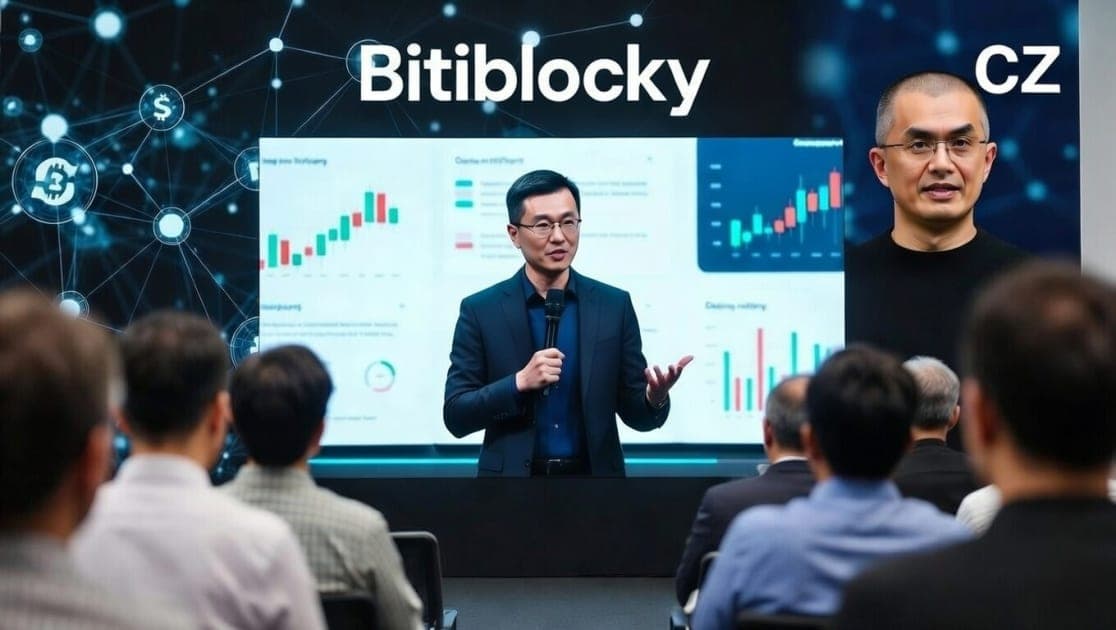
Now Is the Best Time to Educate People About Crypto – CZ’s Strong Opinion
In recent months, Changpeng Zhao — better known as CZ — has been unusually vocal about one specific topic: education.
After stepping down from Binance and serving his sentence, CZ has shifted much of his public communication toward long-term thinking about the crypto industry. One message he has repeated several times stands out:
“Right now is the best time in history to educate people about crypto.”
But why does someone who built the largest crypto exchange in the world believe this exact moment is the ideal time for mass education?
Several Macro Trends Are Converging Right Now
1. Widespread Awareness Without Deep Understanding
Most people in 2025–2026 have heard of Bitcoin, Ethereum, or “crypto”.
Many have even bought a little bit during peaks or received crypto as payment/remittance.
But very few truly understand:
- How blockchains actually work
- The difference between custody and self-custody
- What private keys really mean
- Why decentralization matters (beyond memes)
- How Layer 2s and modular blockchains change scalability
- The security trade-offs of different wallet types
- The long-term economic design of sound money vs inflationary fiat
→ Surface-level awareness + shallow knowledge = dangerous combination.
2. Institutions Are Entering — Retail Is Still Confused
2024–2026 saw:
- Multiple spot Bitcoin & Ethereum ETFs approved
- Major banks offering crypto custody / trading services
- Sovereign wealth funds and pension funds allocating small percentages
- Countries adding Bitcoin to national reserves or strategic assets
Institutions move slowly and carefully. They usually understand risk better than retail.
Meanwhile, the average person still falls for:
- Fake giveaway scams
- Impersonator accounts
- “100× gem” Telegram groups
- Phishing links promising airdrops
The knowledge gap between institutions and everyday people is widening — exactly when more people are getting exposed to crypto.
3. Regulatory Clarity Is Slowly Emerging
After years of fear, uncertainty and doubt (FUD), several major jurisdictions are moving toward clearer rules:
- EU — MiCA framework live
- Several Asian countries opening regulated exchanges again
- UAE, Singapore, Hong Kong positioning as crypto hubs
- Even in the US, post-2024 election regulatory tone has noticeably softened
When rules become clearer → more traditional companies and normal people feel safe to participate → education becomes even more important to prevent them from being exploited.
4. AI + Crypto Intersection Is Exploding
AI agents, on-chain AI models, decentralized compute markets, AI tokens, data labeling DAOs…
New narratives appear every few months.
Most people have no mental model to judge whether a project is legitimate innovation or just hype riding two buzzwords.
Without education, people will either:
- Become overly cynical (“everything is a scam”)
- Or become overly gullible (“AI + blockchain = instant 1000×”)
Both extremes are harmful.
CZ’s Core Argument (paraphrased)
“We spent the last 10–12 years building infrastructure.
The infrastructure is finally here.
Liquidity is here.
Users are coming.
If we don’t educate them properly right now, most will get hurt — and they will blame crypto, not the scammers or their own lack of knowledge.”
He’s essentially saying:
The window where crypto still feels “early” but is no longer completely niche is short.
We’re in that window right now.
What Should Actually Be Taught? (Priorities)
- Security basics first — seed phrases, phishing, fake apps, address poisoning
- Self-custody vs custodial — pros, cons, when to use each
- Bitcoin as sound money — fixed supply, halving, why it’s different from altcoins
- How blockchains reach consensus — very simple PoW vs PoS explanation
- Wallet types — hot, cold, hardware, multisig
- Common scams — patterns, red flags, real examples
- Basic tax & legal awareness — varies by country, but people should at least know it exists
- How to evaluate projects — team, tokenomics, community, GitHub activity, real usage
Final Thought
If CZ — someone who has seen more crypto cycles, more scams, more user mistakes, and more regulatory fights than almost anyone — says “now is the best time to educate people”, it’s probably worth listening.
The infrastructure is ready.
Liquidity is here.
Millions more people are entering.
The only missing piece is mass education.
And that part depends mostly on the people who already understand crypto.
Maybe it’s time we all became teachers — even if just to one or two friends or family members.
The window is open.
But it won’t stay open forever.
What do you think — is now really the best time to onboard and educate new people?
Important DisclaimerLegal
All content on Bitiblocky is for educational and informational purposes only and does not constitute financial advice. Always do your own research (DYOR) and consult with a qualified financial advisor before making investment decisions. Cryptocurrency investments carry significant risk, and you should never invest more than you can afford to lose.
Frequently Asked Questions
Because awareness is already high, institutions are entering, regulations are clarifying, and many more people will enter crypto in the next 2–4 years. The risk of mass misunderstanding and getting scammed is much higher now.
Sign in to comment
Join the conversation by signing in