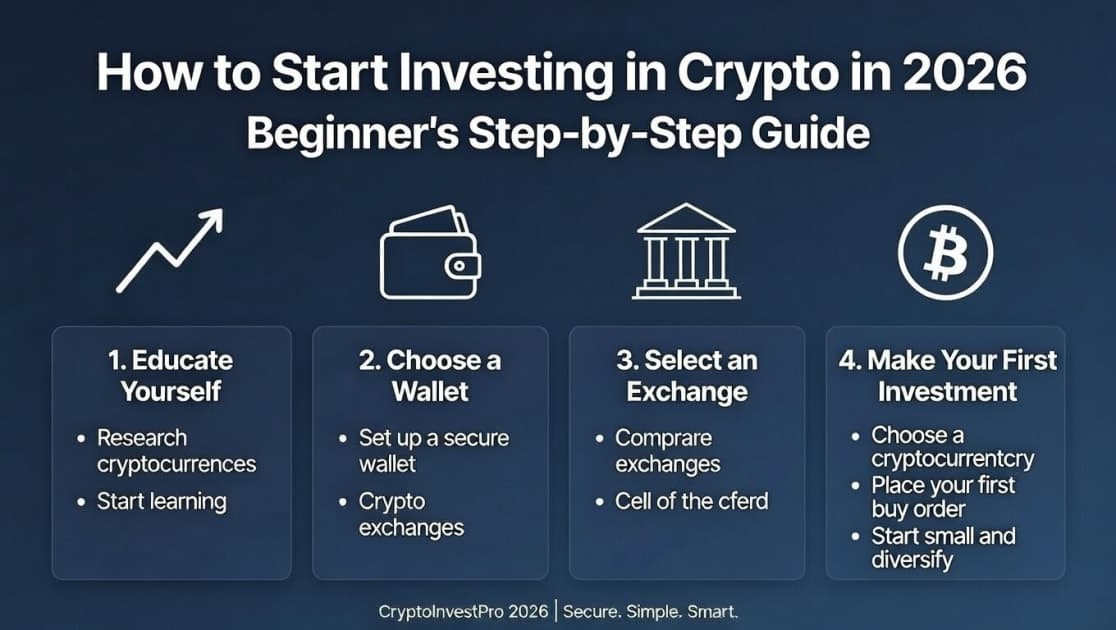
How to Start Investing in Crypto in 2026: Step-by-Step Beginner Guide
Crypto has changed a lot since 2021. In 2026, institutional money, regulated ETFs, stablecoins, and clearer rules in many countries have made it easier — and in some ways safer — for regular people to get started.
But it’s still volatile and full of risks.
This guide is for complete beginners who want to invest responsibly in 2026 without falling for hype, scams, or FOMO.
1. Understand What You’re Actually Buying
Before spending any money, know the basics:
- Bitcoin (BTC) — digital gold, store of value, limited supply (21 million coins)
- Ethereum (ETH) — powers smart contracts, DeFi, NFTs, most of Web3
- Stablecoins (USDT, USDC) — crypto dollars, pegged 1:1 to USD, used for trading and payments
- Altcoins — everything else (Solana, XRP, Chainlink, etc.)
Higher risk, higher potential reward
In 2026, most new investors start with Bitcoin and Ethereum (80–90% of portfolio) and add small positions in other projects only after learning more.
2. Set Clear Goals and Risk Rules (Very Important)
Ask yourself:
- Why am I investing?
(Long-term savings, 5–10 year horizon = good | quick riches = dangerous) - How much can I afford to lose completely?
(Only risk money you don’t need for rent, bills, or emergencies)
Rule of thumb (2026):
Never invest more than 1–5% of your total net worth in crypto as a beginner.
Write it down. This protects you from emotional decisions later.
3. Choose a Reputable Platform (2026 Recommendations)
You have two main safe paths:
Option A: Buy Through Regulated Spot ETFs
(Easiest & safest for most beginners)
- BlackRock iShares Bitcoin Trust (IBIT)
- Fidelity Wise Origin Bitcoin Fund (FBTC)
- Grayscale, ARK, Bitwise, etc.
→ Trade them like normal stocks in your brokerage account
(Fidelity, Schwab, Interactive Brokers, etc.)
Option B: Buy Actual Crypto on Centralized Exchanges
Popular & relatively safe choices in 2026:
- Coinbase — beginner-friendly, insured custody
- Kraken — strong security reputation, good fees
- Binance — huge selection (not available everywhere)
- Bybit / OKX — advanced features
- Local regulated options (Bitstamp in Europe, CoinDCX/WazirX in India, etc.)
⚠️ Avoid unknown platforms promising 100× returns or “free airdrops”.
4. Set Up Your First Account (Step-by-Step)
- Go to Coinbase.com (or your chosen platform)
- Create account → verify identity (KYC: passport/ID + selfie)
- Add payment method
(Bank transfer usually cheapest) - Buy your first crypto:
- Start small: $50–200
- Choose BTC or ETH
- Use a limit order if possible
🎉 Congratulations — you now own crypto!
5. Decide Where to Store It (Security 2026)
Three main choices:
| Option | Security Level | Best For | Recommendation 2026 |
|---|---|---|---|
| Exchange wallet | Medium | Small amounts, trading | OK for < $1,000–2,000 |
| Software wallet | High | Daily use, DeFi | Trust Wallet, MetaMask, Exodus |
| Hardware wallet | Very High | Long-term holding | Ledger Nano X / S Plus, Trezor |
Golden rule (2026):
If you plan to hold >$5,000–10,000 long-term, buy a hardware wallet.
Write down your seed phrase on paper — never screenshot or store it digitally.
6. Build Good Habits & Avoid Common Mistakes
Do This
- Enable 2FA (app-based, not SMS)
- Never share private keys or seed phrases
- Ignore DMs offering “help” or “guaranteed profits”
- Use strong, unique passwords
- Dollar-cost average (DCA) — buy weekly/monthly
- Track your buys (spreadsheet, CoinStats, Delta)
Avoid This
- Leverage trading or futures as a beginner
- “100× gem” Telegram groups
- Clicking suspicious links
- Investing borrowed money
7. What to Watch in 2026 (Beginner Trends)
- More banks & brokers adding crypto and ETFs
- Growth of real-world asset (RWA) tokenization
- Stablecoins used for real payments
- Privacy tools and regulation changes
- AI + crypto projects gaining attention
👉 Focus on learning, not chasing every new narrative.
Final Checklist Before You Buy Anything
- I understand I can lose 100% of my investment
- I only use money I can afford to lose
- I chose a reputable platform
- I set up 2FA and stored my recovery phrase safely
- My first buy is small and boring (BTC/ETH)
Crypto is no longer the “wild west” in 2026 — but it’s still high-risk.
Start slow, learn continuously, and stay safe.
What’s your first crypto step in 2026?
Share in the comments!
Important DisclaimerLegal
All content on Bitiblocky is for educational and informational purposes only and does not constitute financial advice. Always do your own research (DYOR) and consult with a qualified financial advisor before making investment decisions. Cryptocurrency investments carry significant risk, and you should never invest more than you can afford to lose.
Frequently Asked Questions
Yes — the market is more mature with regulated products (ETFs), better security tools, and wider acceptance. But volatility remains high — only invest what you can afford to lose.
Sign in to comment
Join the conversation by signing in