US Naval Blockade on Iran: What’s Happening in the Strait of Hormuz Right Now?
Last Updated: April 15, 2026
Introduction
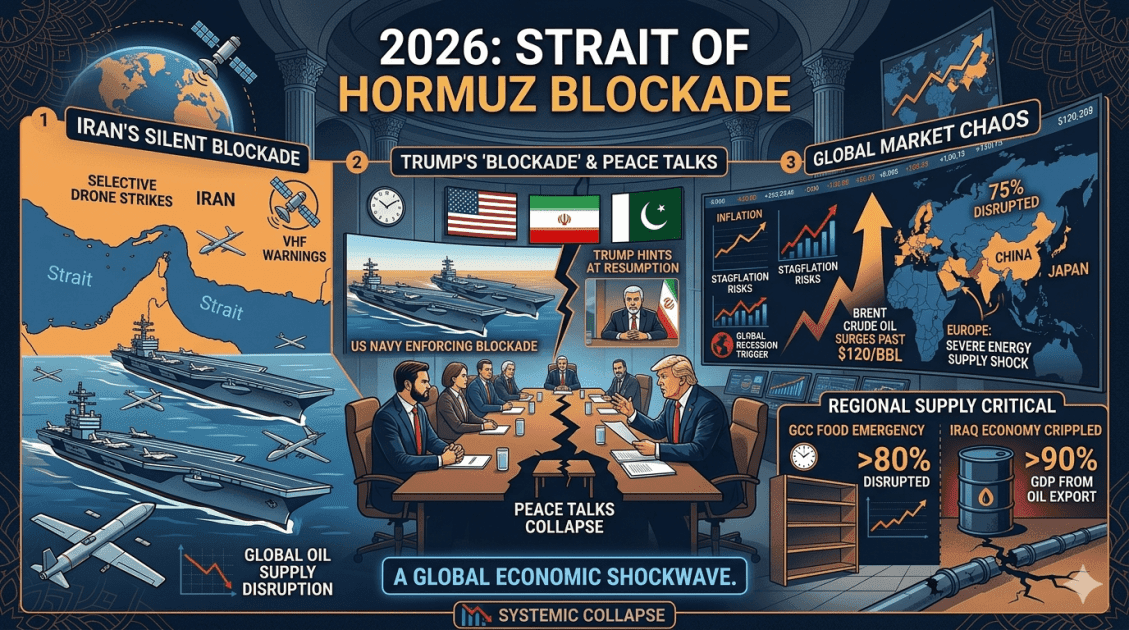
Tensions in the Middle East have escalated sharply as the United States enforces a naval blockade targeting Iran in one of the world’s most critical oil routes—the Strait of Hormuz.
As of April 15, 2026, the situation has entered its second day. The blockade, led by US Central Command (CENTCOM), is already impacting maritime traffic and raising global concerns about oil supply, geopolitical stability, and financial markets.
While there are early signs of possible de-escalation, the situation remains highly dynamic and unpredictable.
What Is Happening in the Strait of Hormuz?
The Strait of Hormuz is a narrow waterway connecting the Persian Gulf to the Arabian Sea. It is one of the most important shipping lanes in the world.
- Around 20% of global oil supply passes through this route.
- It is a key export channel for major oil-producing countries.
Current Situation
- The US has initiated a naval blockade targeting Iranian-linked vessels.
- Most Iranian oil tankers have reportedly been turned back.
- The move is effectively restricting Iran’s ability to export oil.
This marks a major escalation in US-Iran tensions.
Why Did the Blockade Begin?
The blockade follows the failure of US-Iran peace talks led by Vice President JD Vance in Pakistan.
Key Factors
- Diplomatic negotiations failed to reach an agreement.
- The US responded with a show of military force.
- The blockade is being used as leverage to pressure Iran.
President Donald Trump stated that:
"The situation is very close to over" and "extremely ahead of schedule."
This suggests the blockade may be part of a short-term strategy rather than a prolonged conflict.
Key Developments
1. Large-Scale US Military Deployment
- Over 10,000 US troops deployed
- Multiple warships stationed in the region
- Increased surveillance and naval enforcement
2. Partial Enforcement
- Some oil tankers have reportedly passed through
- Raises questions about:
- Enforcement consistency
- Strategic flexibility
- Possible controlled enforcement to avoid global panic
3. Oil Prices Drop
- Despite tensions, oil prices have declined
- Markets expect:
- Short-term conflict
- Quick diplomatic resolution
Impact on Global Markets
Stock Market Reaction
- S&P 500 rises
- Nasdaq gains momentum
- Investors show risk-on behavior
Markets are currently optimistic about de-escalation.
Oil Market Volatility
- High sensitivity to geopolitical developments
- Potential outcomes:
- Short disruption → Stable prices
- Prolonged conflict → Price surge
Crypto Market Reaction
Bitcoin Surges
- Bitcoin approaches $75,000
- Traders anticipate:
- Fast resolution
- Continued liquidity
Ethereum and Altcoins
- Ethereum and other cryptocurrencies also rise
- Increased investor confidence
- Strong market momentum
Could Iran Use Cryptocurrency to Bypass Sanctions?
There is growing speculation that Iran may turn to crypto to bypass restrictions.
Possible Uses
- Cross-border payments
- Avoiding traditional banking systems
- Supporting economic activity under sanctions
Challenges
- Liquidity limitations
- Price volatility
- Blockchain traceability
Despite challenges, crypto remains a potential alternative financial channel.
Strategic Importance of the Strait of Hormuz
Key Facts
- Handles ~20% of global oil trade
- Critical for exports from:
- Saudi Arabia
- UAE
- Kuwait
- Iraq
Any disruption can have immediate global economic effects.
Possible Scenarios
1. Quick De-escalation (Most Likely)
- Talks resume
- Blockade lifted
- Markets stabilize
2. Prolonged Standoff
- Continued restrictions
- Oil supply disruption
- Rising prices and inflation
3. Military Escalation
- Direct conflict
- Severe shipping disruption
- Global market downturn
What Investors Should Watch
- Official US and Iran statements
- Tanker movement in the Strait of Hormuz
- Oil prices (Brent & WTI)
- Stock indices (S&P 500, Nasdaq)
- Bitcoin and crypto trends
Conclusion
The US naval blockade on Iran is a high-impact geopolitical event with global consequences. While markets currently expect a quick resolution, the situation remains uncertain.
Investors and observers should stay alert, as developments in the Strait of Hormuz can rapidly influence oil prices, stock markets, and cryptocurrencies.
Disclaimer
This content is for informational purposes only and does not constitute financial or investment advice.
Important DisclaimerLegal
All content on Bitiblocky is for educational and informational purposes only and does not constitute financial advice. Always do your own research (DYOR) and consult with a qualified financial advisor before making investment decisions. Cryptocurrency investments carry significant risk, and you should never invest more than you can afford to lose.
Frequently Asked Questions
Trump and Vance have left the door open for a “grand bargain.” Israel-Lebanon talks are also progressing in Washington, adding to the diplomatic momentum.
Sign in to comment
Join the conversation by signing in