Quantum Computing Meets Blockchain Security (April 21, 2026)
Introduction
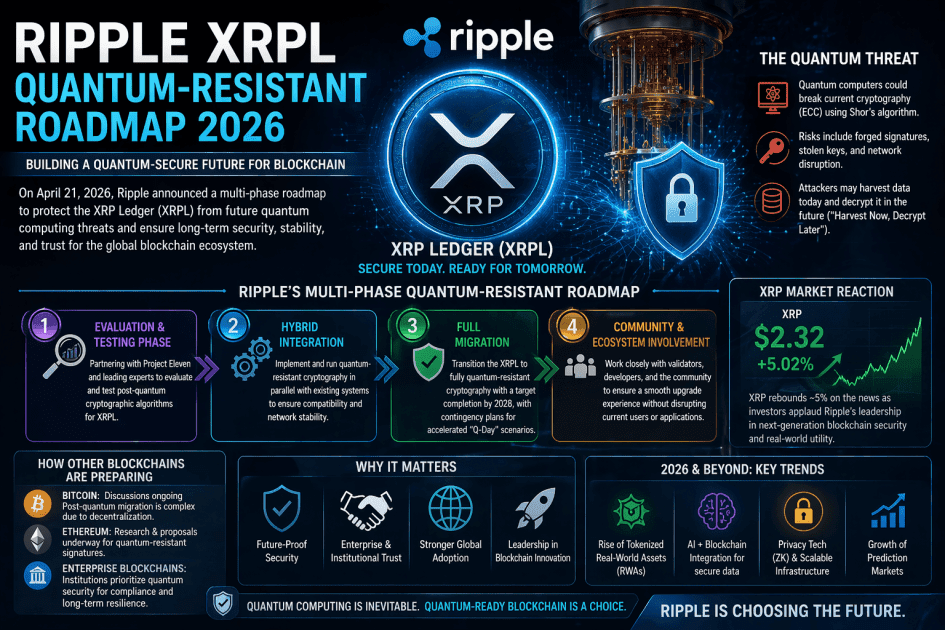
On April 21, 2026, Ripple unveiled a strategic, multi-phase roadmap to protect the XRP Ledger (XRPL) from future quantum computing threats. With the concept of “Q-Day”—the point at which quantum computers can break existing cryptographic systems—becoming increasingly plausible, this move positions Ripple at the forefront of next-generation blockchain security.
This article explores:
- The quantum threat to blockchain
- Ripple’s roadmap in detail
- XRP’s market reaction
- Implications for Bitcoin, Ethereum, and the broader ecosystem
- The intersection of AI, cybersecurity, and blockchain
What Is the Quantum Threat to Blockchain?
Modern blockchains rely heavily on elliptic curve cryptography (ECC) and similar cryptographic systems. However, quantum computers—leveraging algorithms like Shor’s Algorithm—could theoretically break these systems.
Potential Risks:
- Forging digital signatures
- Stealing private keys
- Disrupting consensus mechanisms
Although large-scale, fault-tolerant quantum computers are not yet mainstream, rapid advancements by governments and tech giants are accelerating timelines.
“Harvest Now, Decrypt Later” Risk:
Attackers may:
- Collect encrypted blockchain data today
- Decrypt it in the future once quantum capabilities mature
Ripple’s roadmap directly addresses this emerging threat.
Ripple’s Quantum-Resistant Roadmap
Ripple’s approach is structured into multiple phases to ensure a smooth and secure transition:
1. Evaluation & Testing Phase
- Collaboration with Project Eleven
- Testing post-quantum cryptographic algorithms
2. Hybrid Integration
- Running quantum-resistant cryptography alongside existing systems
- Ensuring backward compatibility
3. Full Migration
- Target timeline: By 2028
- Includes contingency plans for accelerated “Q-Day” scenarios
4. Community & Ecosystem Involvement
- Seamless upgrades to XRPL
- No disruption to current users, developers, or applications
Market Reaction: XRP Gains Momentum
Following the announcement:
- XRP surged ~5%
- Market sentiment improved significantly
This reflects growing investor confidence in projects that prioritize long-term utility and security.
How Other Blockchains Are Preparing
Bitcoin & Ethereum
- Ongoing discussions about post-quantum cryptography
- Migration complexity due to decentralization
Layer-1 Competitors
- Some newer chains are integrating quantum resistance from inception
Enterprise Blockchains
- Financial institutions prioritizing:
- Compliance
- Long-term cryptographic resilience
XRP Market Analysis – April 2026
XRP is benefiting from:
- Positive sentiment around quantum security
- Increasing real-world adoption (e.g., cross-border payments)
- Anticipation of clearer regulatory frameworks
Market Dynamics:
- Bitcoin dominance still limits altcoin rallies
- Utility-driven tokens (like XRP) gaining traction
Broader Blockchain Trends in 2026
Key Developments:
- Tokenized Real-World Assets (RWAs) expanding rapidly
- AI + Blockchain Integration for secure data systems
- Growth of privacy technologies (ZK proofs)
- Emergence of prediction markets
Risks & Best Practices in 2026
Despite quantum concerns, traditional risks remain critical.
Recent Example:
- Kelp DAO exploit highlights ongoing vulnerabilities
Best Practices:
- Conduct regular smart contract audits
- Implement bug bounty programs
- Use decentralized oracles
- Introduce insurance mechanisms
Expert Outlook: Future of Secure Blockchain
By 2028–2030:
- Quantum-resistant cryptography may become standard
- Early adopters (like Ripple) could gain:
- Enterprise trust
- Institutional adoption
- Competitive advantage
Conclusion
Ripple’s quantum-resistant XRPL roadmap underscores a critical reality:
Blockchain innovation must evolve beyond speed and scalability to include long-term security.
As quantum computing advances alongside AI, the future will favor blockchain networks that can deliver:
- Strong security
- Scalable infrastructure
- Real-world utility
The race toward quantum-safe blockchain ecosystems has already begun—and Ripple is positioning itself ahead of the curve.
Important DisclaimerLegal
All content on Bitiblocky is for educational and informational purposes only and does not constitute financial advice. Always do your own research (DYOR) and consult with a qualified financial advisor before making investment decisions. Cryptocurrency investments carry significant risk, and you should never invest more than you can afford to lose.
Frequently Asked Questions
AI is revolutionizing crypto through automated trading, predictive analytics, smart contract optimization, and enhanced security measures. Our AI news section covers the latest developments in AI-powered crypto solutions.
Sign in to comment
Join the conversation by signing in