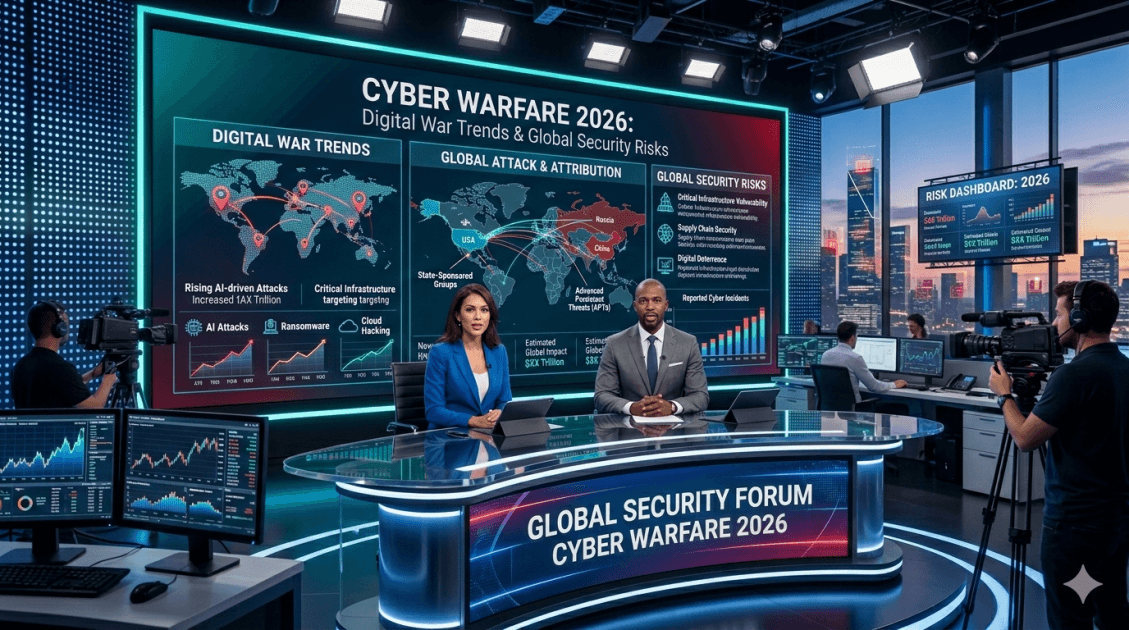
Global Cyber Warfare 2026: How Digital Wars Are Replacing Traditional Battlefields
In 2026, warfare is no longer limited to physical battlefields. Nations are increasingly turning to cyber warfare as a primary tool to gain strategic advantage. From hacking critical infrastructure to manipulating information, digital conflict is redefining global power dynamics.
What is Cyber Warfare?
Cyber warfare refers to the use of digital attacks by one nation to disrupt, damage, or control another nation's systems. These attacks target:
- Power grids
- Banking systems
- Government databases
- Communication networks
Unlike traditional wars, cyber warfare can be conducted remotely, anonymously, and at a fraction of the cost.
Why Cyber Warfare is Rising in 2026
1. Low Cost, High Impact
Launching cyber attacks is far cheaper than maintaining a military force, yet the damage can be equally devastating.
2. Difficult to Trace
Cyber attacks are often anonymous, making retaliation complex and risky.
3. AI-Powered Attacks
Artificial Intelligence is now being used to automate attacks, making them faster and more sophisticated.
Role of AI in Digital War
AI is transforming cyber warfare in several ways:
- Automated hacking systems
- Predictive attack strategies
- Real-time defense mechanisms
However, AI also introduces new risks, as attackers can use it to exploit vulnerabilities faster than ever before.
Major Threats in 2026
- Data breaches affecting millions
- Financial system disruptions
- Infrastructure shutdowns
- Election interference
These threats highlight how cyber warfare directly impacts everyday life.
Global Impact
Cyber warfare affects not only governments but also businesses and individuals.
Key Impacts:
- Economic instability
- Loss of trust in digital systems
- Increased cybersecurity spending
- Disruption of global communication
Challenges & Risks
- Lack of global regulations
- Escalation into physical conflict
- Civilian systems becoming targets
- Ethical concerns around AI use
Future Outlook
The future of warfare will likely be dominated by cyber capabilities. Nations are investing heavily in:
- Cyber defense systems
- AI-powered security
- Digital intelligence
The line between war and peace is becoming increasingly blurred.
Conclusion
Cyber warfare is no longer a futuristic concept—it is happening now. As digital systems become more integrated into our lives, the risk of cyber conflict will continue to grow.
Governments, businesses, and individuals must adapt to this new reality or risk being vulnerable in the next generation of warfare.
The battlefield has moved online—and the war has already begun.
Important DisclaimerLegal
All content on Bitiblocky is for educational and informational purposes only and does not constitute financial advice. Always do your own research (DYOR) and consult with a qualified financial advisor before making investment decisions. Cryptocurrency investments carry significant risk, and you should never invest more than you can afford to lose.
Frequently Asked Questions
Cyber warfare involves digital attacks targeting systems and infrastructure of a nation.
Sign in to comment
Join the conversation by signing in