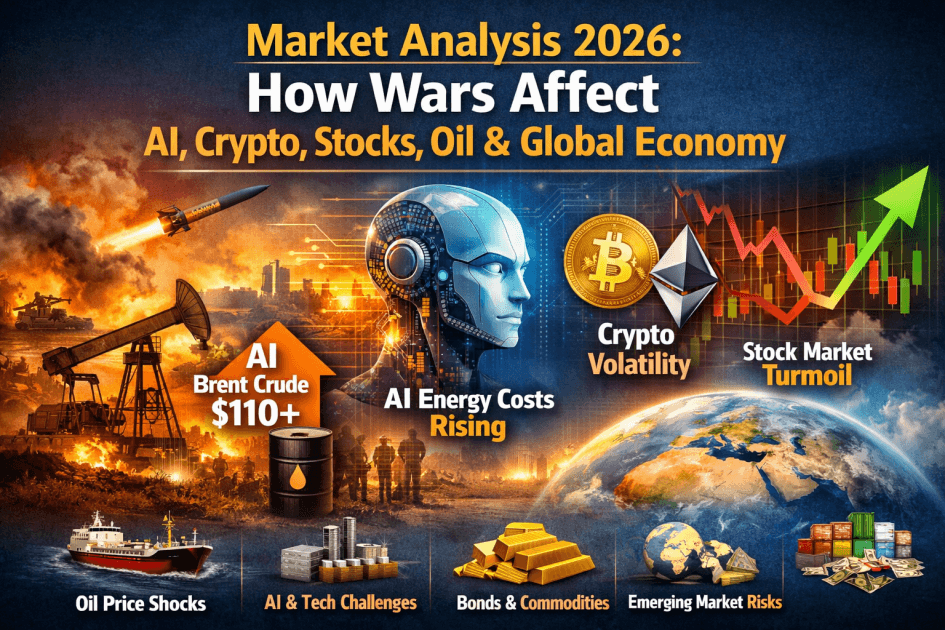
Comprehensive Market Analysis 2026: War Effects on AI, Crypto, Stocks, Oil & Global Economy
The convergence of the Iran war, ongoing Russia-Ukraine fighting, and other tensions has created a multifaceted shock to the global economy in April 2026. The IMF highlights persistent output losses and macroeconomic trade-offs from conflicts.
This broad market analysis 2026 connects the dots across asset classes.
Oil as the Central Transmission Mechanism
The largest historical oil supply disruption via the Strait of Hormuz has driven Brent and WTI prices dramatically higher, creating inflationary pressure worldwide.
This impacts:
- Transportation costs
- Manufacturing expenses
- Energy-intensive industries like AI data centers
AI Sector: Energy Costs and Geopolitical Overlap
AI development is highly energy-intensive. Rising oil and gas prices increase operational costs for:
- Training large AI models
- Running and cooling data centers
Some analysts argue that AI disruption could overshadow war effects for certain assets in the long term.
Additionally:
- Geopolitical uncertainty may slow international AI collaboration
- Governments may accelerate domestic, security-focused AI investments
Interconnections: Stocks, Crypto, Bonds, and Commodities
- Equities — Broad sell-offs in March, with partial recoveries on peace signals
- Crypto — Highly volatile, but Bitcoin shows relative strength
- Commodities — Oil surged sharply; gold showed mixed performance as a safe haven
- Bonds — Yields under pressure due to shifting inflation expectations
Emerging markets and import-dependent economies face the steepest challenges.
Long-Term Economic Scars and Recovery Paths
IMF data shows that conflicts leave lasting damage beyond direct war zones, including:
- Trade disruptions
- Reduced investment flows
- Increased fiscal pressure
Central banks face a difficult balancing act:
- Controlling inflation
- Supporting economic growth
Positive note:
Historically, geopolitical shocks often fade in financial markets over weeks or months if resolved. However, multiple simultaneous conflicts in 2026 increase uncertainty and risk.
Practical Takeaways for Investors
- Watch oil prices and Strait of Hormuz developments as leading indicators
- Balance portfolios with defensive and opportunistic assets
- Diversify strategically into assets that benefit from volatility or decentralization
Important DisclaimerLegal
All content on Bitiblocky is for educational and informational purposes only and does not constitute financial advice. Always do your own research (DYOR) and consult with a qualified financial advisor before making investment decisions. Cryptocurrency investments carry significant risk, and you should never invest more than you can afford to lose.
Frequently Asked Questions
Energy supply shocks and inflation.
Sign in to comment
Join the conversation by signing in